

The notion of use of force in an international context generally refers to the application or threat of physical power or coercion by a State through military means, in a manner which threatens international peace and security. Use of force is strictly regulated under international law, particularly by the United Nations Charter, which prohibits the use of force under its Article 2(4). A recent illustration of the use of force in international relations is that of Russia’s invasion of Ukraine on February 24th, 2022.
This notion is essential in international law as it aims to prevent unnecessary violence, protect human rights, and uphold peace. The general prohibition of use of force compels States to seek dispute resolution through peaceful settlements and diplomatic relations rather than military operations, which threaten the protection of human rights and international peace and security as a whole.
Exceptions to the prohibition on the use of force are however equally essential to address situations where controlled and limited use of force becomes absolutely necessary to respond to aggression or severe humanitarian crises. These exceptions – primarily self-defense and collective security actions authorized by the UN Security Council – provide a legal basis for force in extraordinary cases, ensuring that it is implemented in proportion to the threat at hand. Such exceptions were namely raised in the infamous Oil Platforms case of 1986, in front of the International Court of Justice. In the context of this case, the United States of America claimed self-defense after having destroyed Iranian oil platforms in response to armed attacks by Iran.
To better frame and understand this topic, Ms. Clarisse Reboul conducted an open lecture on the use of force in international law at the Faculty of Law and Political Science.
The lecturer first presented the purposes and function of the United Nations and its Security Council organ. According to Article 1 of its Charter, the United Nations’ main purpose is to maintain international peace and security and, to that effect, to regulate the use of force in international relations. Together with the students, the presenter went over the exact terms of Article 2(4), which specifically sets out the principle of prohibition of use of force. Through example illustrations and case studies, the students better understood and framed the meaning of this prohibition, and what it entails in practice in international relations. The lecture then focused on the punctual exceptions to this prohibition, set out not only in the United Nations’ Charter but also developed over time through State practice. The open lecture ended with a discussion and a Q&A session with the students, covering broader subjects related to the duties and responsibilities of the UN in times of breach of peace.

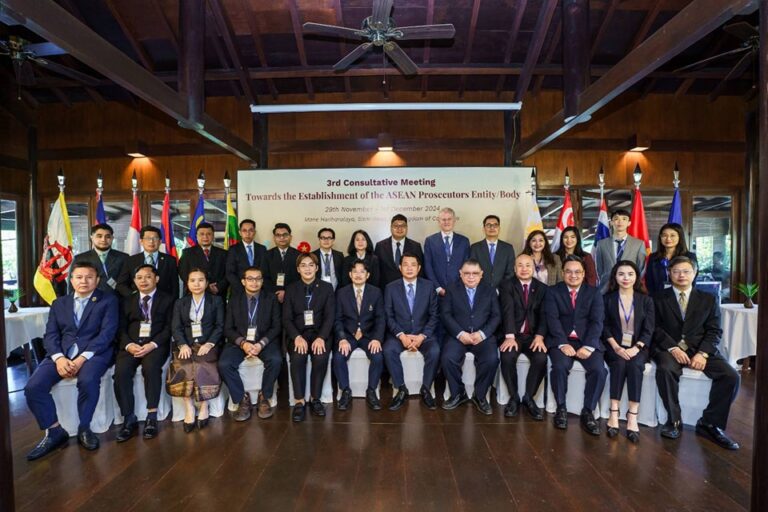
Third Consultative Meeting to Establish the ASEAN Prosecutor Body/Entity
Mr. Jumpon Phansumrit, Deputy Attorney General, along with a delegation from the Office of the Attorney General of Thailand, participated in the Third Consultative Meeting to Establish the ASEAN Prosecutor

