

The legal landscape is constantly evolving, and a solid understanding of evidence types and legal elements is essential for anyone involved in criminal investigations or prosecutions. A thorough understanding of evidence analysis is beneficial for a successful prosecution and vital for upholding justice and ensuring fair trials. Future legal professionals can build more robust, more credible cases by distinguishing between primary, secondary, and third-level evidence. ILSTA Senior Law Enforcement Expert, Mr Mike Dyson, had the opportunity to deliver an open lecture to law students at the National University of Lao. The lecture focused on a practical approach to analysing evidence in prosecution case files. The session aimed to equip future legal professionals with the skills to assess a case’s strength and pinpoint any gaps in evidence.
The speaker pointed out that it is necessary to distinguish between the sources of evidence: primary evidence is direct and highly reliable proof, such as the production of original documents or eyewitnesses; secondary evidence relates to copies of documents or second-hand reports that back up the primary evidence; third-level evidence, such as hearsay and expert opinions, provides additional but less direct support. Mastering these distinctions can significantly enhance the integrity of a legal case.
The lecture also emphasized the importance of an investigator understanding the elements of an offense to ensure that all legal requirements are satisfied to sustain a conviction. Mr. Dyson explained the “points to prove” for each crime—very specific legal elements that must be substantiated with evidence to sustain charges. Investigating officers can thus synchronize their efforts of evidence gathering with these legal standards so that stronger cases and effective prosecutions are brought about.
The session wrapped up with an inspiring show of willingness to learn and very relevant questions from the students. The speaker complimented them on their eagerness to learn and develop their skills. He emphasized that mastering evidence analysis is not just an essential requirement for successful prosecution but also fundamentally important for justice and to ensure that individuals receive a fair trial. Seeing the next generation of legal minds adopting these principles only proves that such education is truly worthwhile.

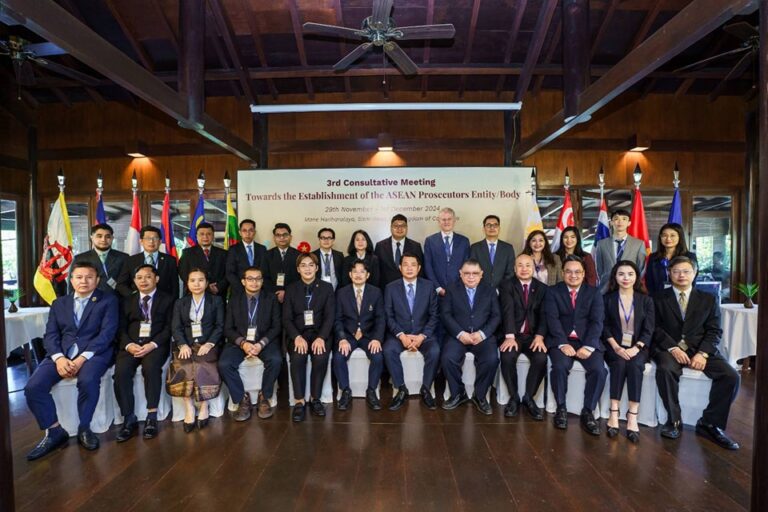
Third Consultative Meeting to Establish the ASEAN Prosecutor Body/Entity
Mr. Jumpon Phansumrit, Deputy Attorney General, along with a delegation from the Office of the Attorney General of Thailand, participated in the Third Consultative Meeting to Establish the ASEAN Prosecutor

