

Nelson Mandela International Day on the 18th of July marks the remembrance of the person who fought for the equality and dignity of all human beings.
Mandela was sentenced to imprisonment for 27 years during his fight for social justice before being released and appointed as the president of South Africa. His successful lifetime work on the resistance to the apartheid policy in his country is globally regarded as a symbol of democracy and a culture of peace.
One of Nelson Mandela’s legacies, The United Nations Standard Minimum Rules for the Treatment of Prisoners (2015), also known as Nelson Mandela Rules was named in his honour. Nelson Mandela Rules lays out principles for the treatment of prisoners not as if they are convicted but as humans. The provisions serve as a guideline for treating prisoners with respect and that they are not subject to persecution or torture, advocating the equality of all.
The guidelines emphasize the rights and dignity of prisoners, addressing critical aspects of prison life, such as healthcare, nutrition, sanitation, and the special needs of vulnerable groups. By promoting a rehabilitative approach to incarceration, the rules aim to uphold justice and human rights for all individuals in detention.
The essence of the Nelson Mandela Rules is to create environments that support the rehabilitation and successful reintegration of inmates into society. They advocate for comprehensive access to education, vocational training, and mental health resources, recognizing that the conditions of incarceration can profoundly affect an individual’s behaviour and future. The rules explicitly prohibit torture and degrading treatment, particularly in the case of prolonged solitary confinement. The rules encourage the provision of programs that can help inmates acquire skills and knowledge. This aligns with Mandela’s vision of education as a powerful tool for social change. By promoting these standards, the Nelson Mandela Rules serve as a vital framework for improving prison conditions worldwide and ensuring that the rights and dignity of all individuals, regardless of their past, are upheld.

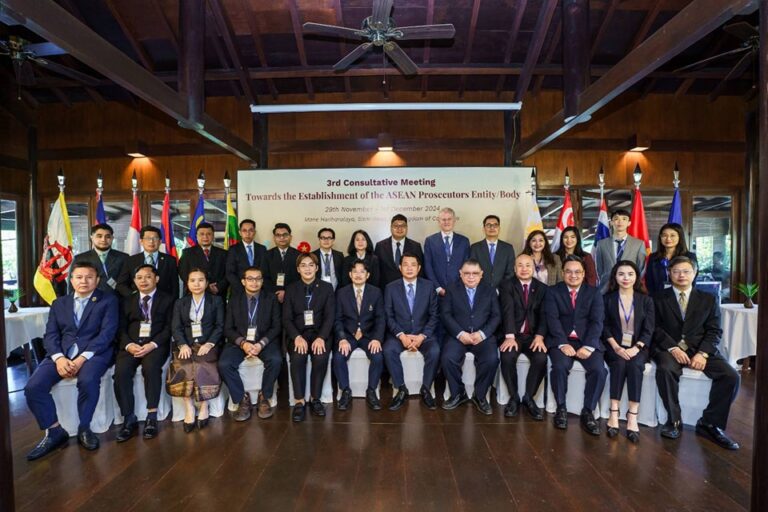
Third Consultative Meeting to Establish the ASEAN Prosecutor Body/Entity
Mr. Jumpon Phansumrit, Deputy Attorney General, along with a delegation from the Office of the Attorney General of Thailand, participated in the Third Consultative Meeting to Establish the ASEAN Prosecutor

